
By PIPER GALLAGHER
Senior Reporter
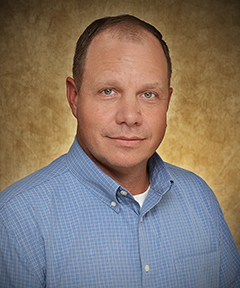
Dr. Kent Martin was born and raised in Woods county, and then he went to school at Alva Public Schools before starting his college academics at Northwestern. Eventually he made his way to Oklahoma State University where he earned his bachelor’s and master’s degree in plant sciences. After, he went to Kansas State University to earn a doctorate degree in agronomy.
Q. What sold you on coming to NWOSU?
A. I moved back to Oklahoma from Kansas when my dad passed away in 2011, and when I made that move, well I’ll back up. My family has a very long history of farming in Woods County, so I’m the 6th generation of one side of the family that has farmed some ground south of Alva. And so I was coming back to, I think you would say, to carry on the legacy of the farm and what the farm means to the family. And so when I did that, with my background and with the education I had been through, I thought this was kind of a great fit to use my education and to have a position, at a good university, that is really close to kind of what my family operation is. And so I actually moved back in 2011 and it just took a while to get back here.
Q. What is one of the first goals you hope to accomplish here?
A. You know, I think really what the first thing I want to do is I want to make sure and have a good relationship and connection to the students. And I know as we start, I’m trying to develop that connection across multiple years and classes of students. And so, I want to develop that, and then as I have had that opportunity to develop that relationship, as they come in and keep it for multiple years, I think that will move on to the later goals, and that is that because I feel like being an agronomy professor here is a discipline where you’re at kind of the the intersection of theory and application, because we have a lot of students who, I think, even today, students that were in my class today, will go home to their family farm tonight or this weekend. And so, being able to give them information that they can actually use and relate it directly to their farming practice is one of the major goals that I have. And then there are some opportunities that I’ve had over the last 15 or so years, because I’ve been doing consulting work for the last 15 years since I moved back. There’s some opportunities that I see that I think we could enhance the, especially agronomy experience, but agriculture experience in general with Northwestern, so that our students can have kind of a broader range of experiences and see more that we have to offer just because I’ve kind of been in a lot of different, interesting scenarios that I think I can bring back to Northwestern.
Q. What is your favorite class to teach and why?
A. Oh, uh, that would make the other classes jealous. So my background all the way through school, and a lot of what I’ve done in my consulting work between moving back and now has been focused on different nutrient management. So I have a course called Soil Conservation and Fertility, and I would say that’s my favorite, just from the standpoint that I have the opportunity to go through all of these things that I have been really, really deep into. It’s also a really good, deep thinking class. It is an upper level class, so they already have a lot of the basics. So they ask really good questions, they’re great kids, and I think they’re ones that can take what we talk about in class again and, like, use that information, literally, that evening or that weekend. So I really like that part of that class.
Q. What is your “superpower”?
A. It would just be to relate directly to and impact the students. I mean, I think that ultimately that’s what we all want to do within the university is to be able to relate to them and to be able to provide them information that changes their lives and that makes them better at what they’re passionate about. And so if I can identify that in the students and get that information to them in a way that’s entertaining and fun and useful, I think that’s what I would be able to do
Q. What is something most people don’t know about you?
A. I was just on a conference call with NASA. So I sit on an advisory committee to NASA. So NASA has a lot of interaction with agriculture and it’s an opportunity for agriculture to help direct the activities of NASA. And actually, fun fact, is in October, I think the 9th, NASA will be on campus, so that relationship with them is actually bringing them to Northwestern. Then students will have an opportunity to interact with people from NASA that are literally controlling what satellites do and how they collect data from Earth. And so there are a lot of things like that because I’ve been a consultant and researcher for the last 15 years. I’ve done a lot of things that I don’t really talk a lot about because there’s never really been an outlet for me to talk about it. And a lot of people even hardly believe me whenever I tell them that they’re like, what are you doing with NASA? NASA needs to know what is relevant to farmers. And we are in a farm intensive area and right now, they really want to know what farmers in Northwest Oklahoma are doing. Yeah. A lot of people find that pretty fascinating.