

By SHEALYN PRATT
When a mental health crisis strikes, Northwestern students have resources readily available to help them through the moment and remind them they are not alone.
As we complete Suicide Awareness Week, it is important to remain informed on mental health resources on campus. Northwestern’s counseling services offer several different resources and licensed professionals who are here to help.
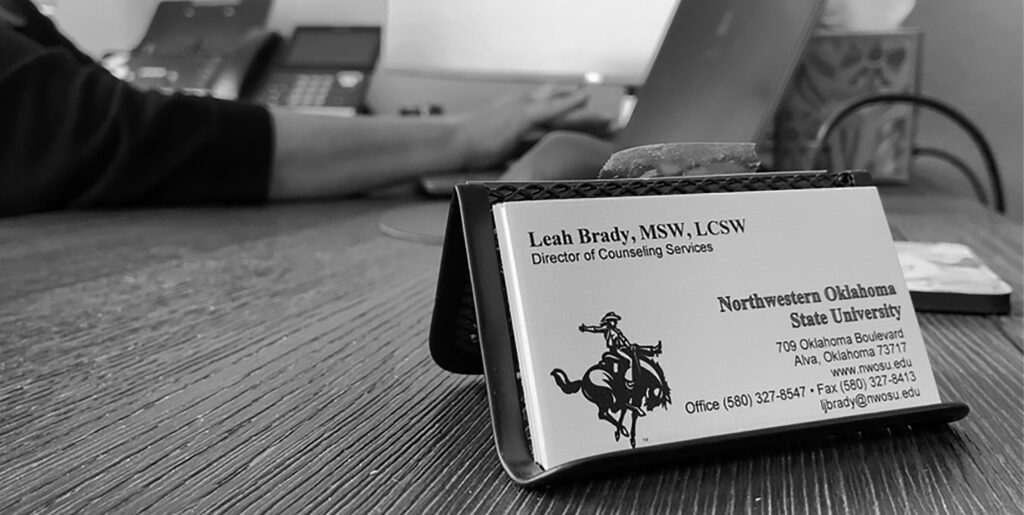
Leah Brady, MSW, LCSW, is a Northwestern graduate who recently came back to Alva to take over the counseling department. Brady graduated from NWOSU in 2008 with her bachelors in social work before receiving her master’s degree from the University of Oklahoma.
Brady came back to the Ranger family in mid-July and said she is happy to be back and serving students. She is here to provide free, confidential counseling services for currently enrolled students on all Northwestern campuses.
“It’s so needed, college is hard,” Brady said. “It is exciting but sometimes when you get here, our expectations may be a little different and it can be a little difficult adjusting. I really just love being that person to provide that help and help students get over that hump.”
Brady is a licensed clinical social worker of 20 years, providing anywhere from case management to outpatient services. She noted that her experience and perspective are wide-ranging.
“I have a variety of experience in different populations and settings. I’ve provided outpatient counseling for community mental health, youth and family services, inpatient substance abuse treatment, and also some public health.”
She hopes to continue to promote Northwestern’s counseling services and make them more visible, accessible and approachable to students.
Brady emphasized the importance of sharing resources with students.
“Even though we are kind of constantly talking about it (counseling resources), it is something that should always be visible.”
Taylor Wilson, the previous director of the counseling services, is still at Northwestern part time and is doing “Ranger Ready Wellness Check-Ins.” Wilson is offering walk-in services on Tuesdays and Thursdays from 10:30 a.m. to 1:45 p.m.
“Anybody can walk in,” Brady said, “Maybe they don’t even know what they want, they’re just struggling and want someone to talk to, she can talk to them, do some screeners and see what will help them the most.”
Brady also mentioned TimelyCare as a resource for any students who may be struggling. TimelyCare is a form of virtual care that is free of charge. Northwestern students don’t need insurance or any other form of payment to receive care.
Whether it is for a crisis conversation for suicidal thoughts at 2 in the morning or you’re just wanting to talk to someone on a random afternoon, someone will be there. You do not have to handle hard, confusing emotions alone. Brady mentioned that one in five students struggle with suicidal ideation, particularly college freshmen.
“It’s okay to talk about suicide,” Brady explained. “Just asking somebody, are you thinking about hurting yourself or are you thinking about suicide, does not put that idea on their head. If they say yes, you know, and especially if they’re an immediate danger, don’t leave them alone, but if they say yes, just help connect them somewhere.”
Being extra vigilant about the well-being of your friends, family and yourself is a preventative measure to protect from mental health struggles. Be present. Be kind. Have conversations with your friends, even if they’re short.
“You don’t have to have all the right words,” Brady said. “Just to have somebody notice it and to spend some time with them and talking with them in a nonjudgmental way.”
Brady also mentioned campus police as a resource for any mental health emergencies. If you’re on any of the Northwestern campuses, contact the campus police and they will show up to you with an iPad that is connected to a licensed crisis counselor that’s trained specifically for crisis situations.
“They’re not gonna show up in handcuffs and haul somebody off anywhere,” Brady said.
“Just because somebody’s having suicidal thoughts doesn’t always mean they need to go somewhere,” Brady continued. “Maybe they just need to be connected with somebody at that time and so they will determine that together.”
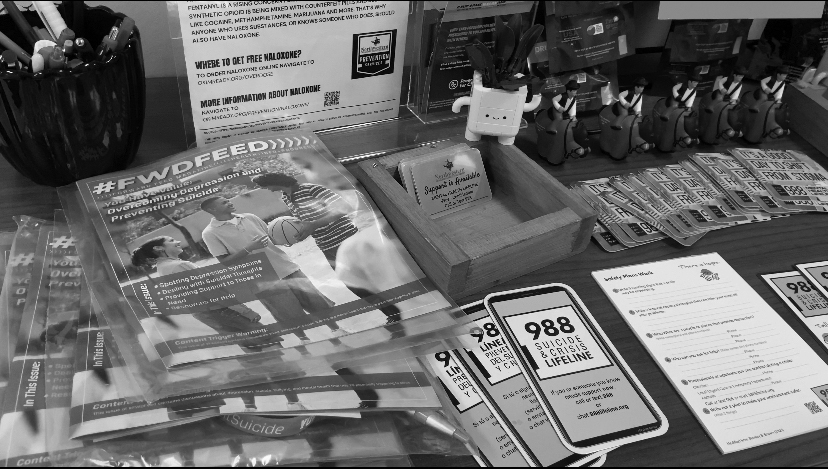
If you are not in a crisis situation, the counselors office is located on the second floor or Ryerson Hall. In front of the door, you will find a resource table containing lock pouches for medication, drug deactivation kits and suicide prevention resources.
The drug deactivation kits can be used for disposal of expired medication or medications of any kind by following the instructions on the back of the pouch. On the resource table, you’ll be able to find a paper with the locations of places that allow for safe disposal of any kind of medication.
“Dispose of them properly, rather than throwing them in the trash where they might get in the hands of somebody it shouldn’t,” Brady warned.
These resources tables are also located outside of the Lasso center, on the first floor of Ryerson Hall, and by the vending machines in the Student Center.
Naloxone, previously seen on these resource tables, are now located in the counselors offices. Naloxone is an emergency treatment for an opioid overdose. If you suspect that someone may be having an overdose of any kind, administering the naloxone can reverse the effects.
“They look like a nose spray, you tilt the head back and insert,” Brady said.
There are directions on the back of the naloxone box and an example video on the counseling service website that you can watch to see how to administer it.
You don’t have to know for sure that a person is suffering from an opioid overdose. They could be having another medical episode, but naloxone will not harm them if they are not having an opioid episode and it’s something else.
“It’s a good thing to just have your car or in your dorm, in your home, just on hand,” Brady said. “Anybody can come up here and get one. They are free as well.
Whether it is a friend or a stranger, it is important to be prepared and ready to help someone during a time of crisis. Mental health is unpredictable. Suicidal thoughts and mental health struggles can effect anyone.
“Those thoughts and those things are normal,” Brady said.”To feel stressed during those times times, and if those lead to suicidal ideation, you have services here.”
If you or someone that you know is battling with depression, anxiety or any other struggle that you don’t want to deal with alone, know that you don’t have to.