
BY PIPER GALLAGHER
For the first time in years, students are looking up.
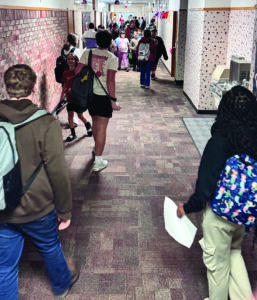
This change comes as Oklahoma public schools implement a statewide ban on student cellphone use during instructional hours for the 2025–26 school year. The ban is outlined in Senate Bill 139, and according to Oklahoma Legislature, it requires public schools to implement policies that restrict student personal cellphone use on campus during school hours.
This bill signed by Oklahoma Gov Kevin Stitt was intended to reduce distractions in classrooms and encourage face-to-face interaction and participation during instructional time. Lawmakers also hoped the bill would help address declining academic performances and student mental health.
Schools were allowed to enforce the ban how they saw fit, whether that be making students put their phones into pouches that lock or allowing phones to be put in lockers.
Yondr Pouches have been a popular option for schools. These pouches offer students an option that allows them to keep their cellphone within their possession during the school day.
The pouch is locked upon school arrival and can only be unlocked with magnets that are typically kept in school offices or with teachers.
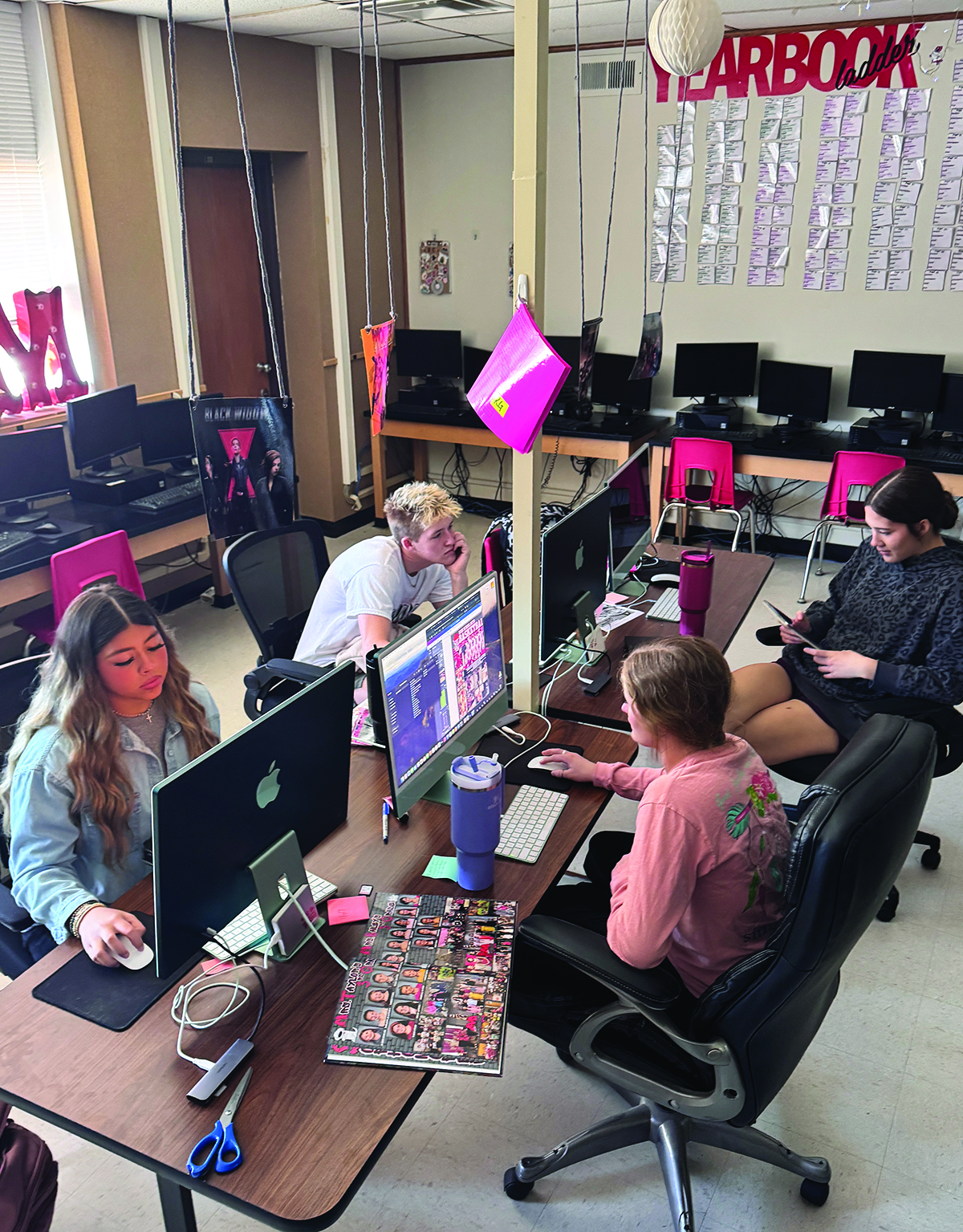
Students in the yearbook class at Medford High spend more time focusing on their tasks instead of monitoring their phones.
This is the choice of Watonga Public Schools, a small school in western Oklahoma. They actually received a grant for the pouches, which helped with the cost of implementing this bill.
Although there were some learning curves when the ban was first announced, teachers are widely pleased with how the policy has impacted their school systems.
Kara Locke began teaching nine years ago, when apps like Snapchat and other social media were just beginning to kick start in popularity. As the yearbook teacher at Medford Public Schools, she has personally seen changes in her classroom and in the hallways.
“It’s louder,” Locke said. “Everything is louder but in such a good way.”
Previously, the hallways and lunchrooms saw students with their noses in their phones and headphones in their ears. Now, Locke said students are talking to each other and spending quality time together.
“I see kids actually eating, too,” Locke said.
Previously, some kids would spend all of their lunch period on their phones, getting so distracted and invested in their devices that they wouldn’t eat.
“Which is weird to think about,” Locke said. “It’s way louder in the halls, it’s way louder at lunch, but in all the good ways.”
The absence of cellphones has allowed kids to act their age again, and go through the day without drama and stress, Locke said. Especially at a middle school age, social media can be harmful and distracting.
Administrators have also noticed a change in student behaviors.
“Students have definitely increased their verbal communication with each other, and it has really helped with some student self confidence, in my opinion,” said Garrett Smith, the principal of Weatherford Public Schools.
Smith has been in favor of a no cell phone policy for a long time. He said he has seen a lot of positives to it, like reduced cheating and better school culture.
Smith said he hasn’t noticed any negatives from the ban in Weatherford schools. Some parents across the state were concerned about not having access to their kids during the school day. And although it has been an adjustment, the benefits have been clear.
Michelle Hilterbran, a history and AP teacher at Watonga Public Schools, said the changes were even noticeable off campus, like on field trips. When the Watonga FCCLA went on a trip to a district convention, they didn’t allow students to have their phones there either.
“I’m proud that Watonga has stuck by it, and we’re following through with it,” Hilterbran said.
In her classes, Hilterbran said she finds students are more attentive and involved with the material she’s teaching, and they are also utilizing resources like their Chromebooks more often in class time.
Another positive outcome from the cellphone ban has been that schools are able to stop misinformation or gossip spreading about incidents that happen at school.
“It allows us to have some normalcy and control of information before it gets crazy,” Hilterbran said.
She said in the past, situations that were not major have blown up or gotten out of control because of phones and social media.
It has also made students, and parents, more responsible. Locke said when kids used to forget things like school or sporting supplies, they could just text their parents. Now, the office has to get involved, and it’s a bigger deal, which has led kids to be more accountable to avoid that.
School districts are able to punish violations of the cellphone policy as they see fit. Schools can use warnings, in-school and out-of-school suspension, and other disciplinary measures at their discretion.
A minor problem that schools have run into is that information is not as easy to get out as it was previously. For example, if an activity bus needs to leave at a different time for a basketball game, the school has to ensure that the information is spread as wide and as quickly as possible, when previously kids could just text their parents to let them know.
“We as a school have to go back to old school and start sending things home [in] communicating better with parents,” Locke said. “We just kind of stopped doing that because of the ease of cellphones.”
The ban was originally introduced as a one-year trial policy, with schools then having the option to choose whether or not to continue the ban. However, state Superintendent Lindel Fields is supporting a bill that would make this ban permanent, according to KOCO5. This new bill would remove the option of school districts to choose.
Safety is a main concern of some parents who expressed their opinions of being opposed to the ban. But another bill that is also currently being backed by Fields aims to increase school safety and security.
If both of these bills pass, Oklahoma schools will see a permanent concrete ban on cellphones, and funding for security upgrades for increased school safety. According to KOCO5, Senate Bill 1189 would fund things like school officers, security systems and cameras, and shelters in Oklahoma’s public schools.
It’s important to note that private schools in Oklahoma do not have to adhere to the cellphone ban. This only affects public school systems.
While Oklahoma did not start the trend, other surrounding states have been considering similar policies and legislation. In January of 2026 Kansas began to discuss potential statewide cellphone bans. Much like in Oklahoma, opinions on the ban are divided.
Supporters say it will decrease distractions and encourage participation, while those who oppose it say it is an overstep of school power.
“Some kids were a little upset because they feel like their rights are being denied, but I reminded some of them that until they’re 18 and not a student on our campus, they really still have to abide by whatever our rules are,” Hilterbran said.
Hilterbran said she actually expected more pushback than they received, and that the Watonga administration handled it early in the summer in order to let students and parents prepare.