
BY INGRID MALDONADO
The Woods County Coalition hosted a poverty simulation March 5 where participants engaged in an interactive experience that brought awareness to poverty.
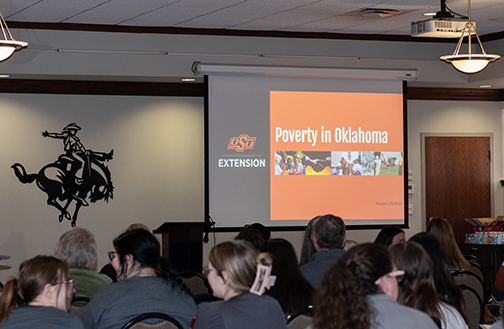
Participantion was open to students, community members and employees. Many faculty from surrounding schools participated as well as nursing students, social work and education majors.
“One of the goals is to spread awareness that poverty is an issue and secondary to make people people aware of the struggles that people who are living in poverty are facing and hopefully build empathy towards them,” said Susan Holliday, the Woods County Extension director.
During the event, which started with a presentation and later simulation, participants were given information about poverty. According to Ruby Payne in “Bridges out of Poverty,” poverty is definded as the extent to which an individual does without resources. Resources included include financial, mental, physical and other resources. These resources or the lack of them impacts a person’s ability to handle stressful situations.
Holliday said one thing people can do to help is bring awareness of the resources that are out there in the community. She said people can donate to the food pantry, blessing boxes and the Campus Cabinet. If people can’t donate money or items, they can always volunteer.
When the simulation part started, participants were asked to pick a random name tag and were assigned with other participants in different families. There were families of all varieties with different types of situations. Participants were then asked to portray their assigned character.
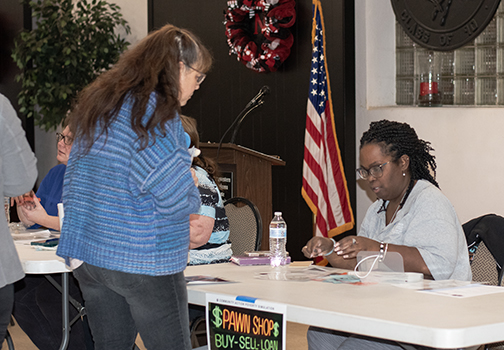
In the simulation, each family was given its family situation, with what bills are due, how much each person in the family made, and more. To visit any of the tables set up as community establishments like a bank, job or store, they needed a bus pass, which costs money.
Toward the end, many participants struggled to keep up, some being evicted from their homes. Many struggled to pay their bills on time, buy weekly groceries and clothing while trying to afford everything. This made many realize how difficult it is to be in this situation.
“I think it’s easy just to look at people and put them in a category, instead of thinking that there’s issues beyond just ‘we’re poor’,” said Tani Tanio, the director of the Clothing Exchange at Bridge 2 Hope in Alva.
Tanio said the simulation helps people see it is not about telling people to get a job or to spend their money wisely but to realize there are other factors involved, other situations one might not realize. She said there are times when people are waiting for resources to become available.
“I know poverty is a huge problem, so this event didn’t really change my view of it,” said Cathy Buchanan, one of the participants. “I’m just glad they’re bringing awareness to it because I think it’s something that people need to be aware of. Your neighbor may look OK, [but] that doesn’t mean that they are.”
Holliday said this was the first time doing this simulation in Alva, and she is planning to do it again in the future. There was a lot of interest reached a lot of people but have more people to reach, Holliday said.
—
For more information, contact Holliday at (580) 327-2786 or susan.holliday@okstate.edu