
By MEGAN SPRAY
The moment a player enters the transfer portal, everything changes – opportunity expands, but so does the uncertainty.
As college athletics continues to evolve, the transfer portal has become one of the most influential forces in recruiting. Designed to give athletes more control over their careers, the portal has opened doors for some while creating new obstacles for others. From current players navigating the process to coaches adjusting their recruiting strategies, the transfer portal is reshaping how opportunities are earned and who gets them.

The NCAA transfer portal, introduced in 2018, allows student-athletes to declare their intent to transfer and be recruited by other programs. In recent years, rule changes allowing immediate eligibility have made the portal even more appealing. Combined with the rise of name, image, and likeness (NIL) opportunities, the system has transformed college athletics into a faster-moving and more competitive environment.
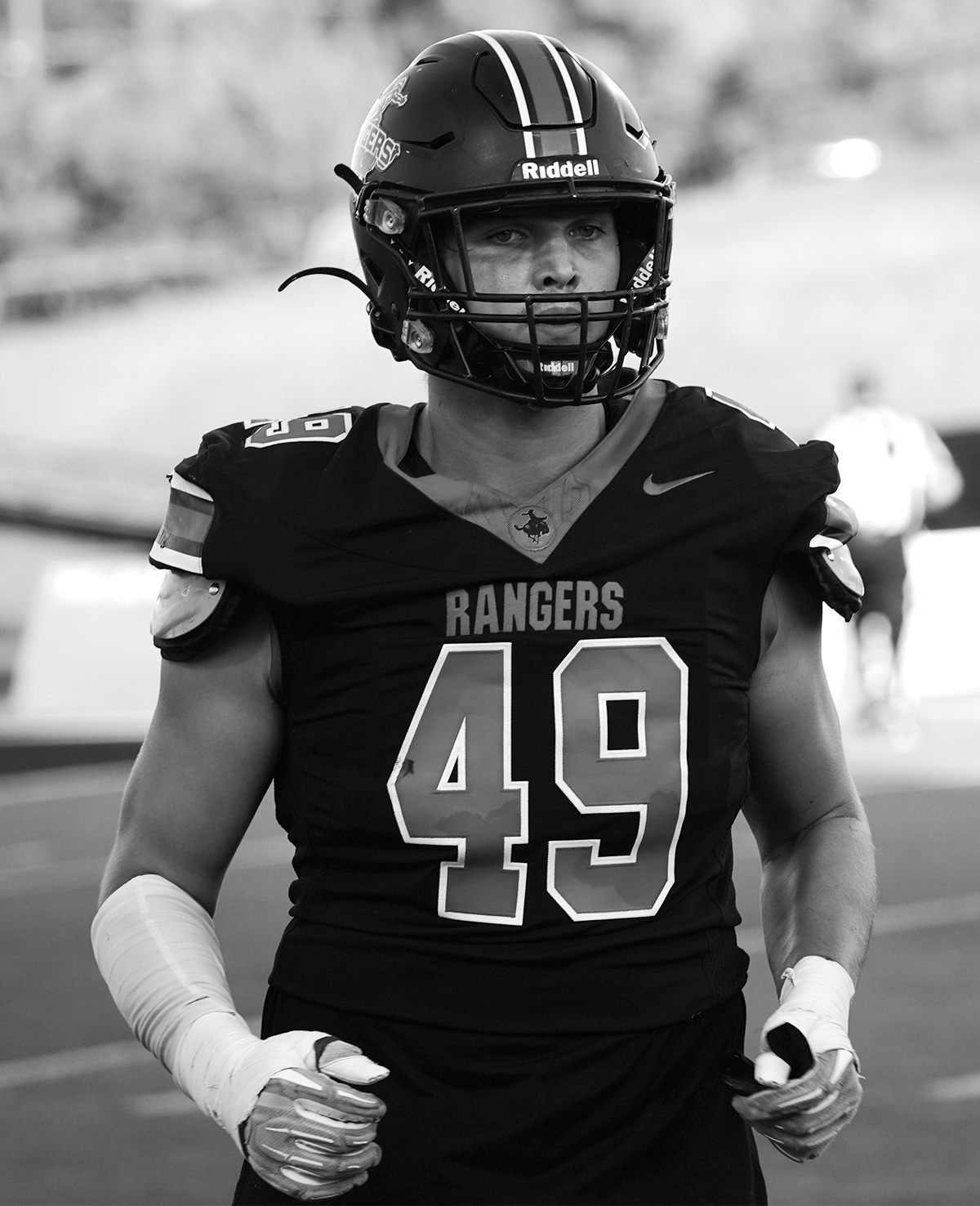
For Harrison Stapleton, who ran track and played football the transition wasn’t just about switching schools; it was about starting over.
Stapleton, a sophomore from Pond Creek, transferred from Northwestern Oklahoma State University to Tulsa University, forcing him to quickly adapt both on and off the track. The move placed him in a new system with new expectations, requiring immediate adjustment,
“Transferring pushed me to adjust fast and prove myself again, which made me tougher as an athlete,” Stapleton said. “It also forced me to be more disciplined in school since I had to stay on top of everything in a new environment.”
Adjusting to a new program meant more than just learning plays. It required rebuilding relationships, earning trust from coaches, and finding his role on the team and all while maintaining academic responsibilities, he said.
While the opportunity brought growth, it also came with challenges he said he didn’t expect.
“The hardest part was how much waiting and uncertainty there is,” Stapleton said. “You don’t always hear back right away, so you just have to stay patient and keep working.”
That uncertainty is something many athletes underestimate when entering the portal. The process is not automatic, and exposure is not guaranteed.
“I thought schools would come to me once I entered,” Stapleton said. “But it’s really on you to reach out and market yourself. It felt more like a job search than I expected.”
For others, the decision to transfer comes more quickly and with fewer doubts.
EJ James, a freshman football player from Muskogee, Oklahoma, transferred from the University of Central Oklahoma to Northeastern State University after feeling his previous situation was not the right fit. For him, the decision was straightforward.
“The coaches didn’t like me at my other school, and I figured it would be better for me to transfer,” James said.
Unlike Stapleton’s experience of waiting and uncertainty, James said he received immediate interest once entering the portal.
“Five colleges texted me about coming to their school,” James said.
Even with that attention, the process still requires athletes to make quick decisions that can impact their long-term careers. For James, however, had little hesitation.
“Yes, it was a very easy decision for me,” James said.
His experience highlights how different the process can be depending on the athlete’s situation, performance and timing.
While players experience the portal firsthand, coaches are seeing its impact from a broader perspective, especially at the high school level.
Prentice Joseph, a defensive line coach and recruiting coordinator at Broken Arrow High School, said the transfer portal has made recruiting more competitive for high school athletes.
“The transfer portal has definitely tightened the window for high school athletes,” Joseph said. “College programs are leaning more toward proven production instead of projection.”
In the past, many college programs were willing to invest in developing high school talent over time. Now, coaches often look for players who can contribute immediately, giving transfers an advantage.
As a result, Joseph said expectations for younger players have increased significantly.
“It’s not enough to have potential anymore,” Joseph said. “You have to show consistency, production and maturity on and off the field.”
This shift has changed how he prepares and promotes his athletes, starting earlier in their development.
“It’s forced me to be more intentional,” Joseph said. “It’s less about waiting to be found and more about positioning them intentionally.”
That includes building relationships with college programs and making sure athletes are visible to recruiters.
“I make sure I’m advocating for my athletes consistently and getting them in front of the right programs,” Joseph said. “It’s not just about their film; it’s about who they are as people.”
At the college level, recruiting strategies are evolving just as quickly.
Kyle Buckner, an offensive analyst at the University of Nevada, Las Vegas, said the transfer portal has become an essential part of roster building.
“The transfer portal gives you more options, and in my opinion, it helps make your [ position group] complete,” Buckner said. “If you have a really young group, you can go out and find experience.”
Unlike high school recruits, transfer players often come with game experience, making them less of a risk for coaching staff.
“It is easier to know what you’re getting through the transfer portal if they’ve played in games,” Buckner said. “Most freshmen need time to develop, but transfers are usually past that stage.”
However, evaluating players goes beyond statistics and game film.
“You don’t always know what you’re getting,” Buckner said. “You have to talk to their previous coaches and really try to understand their habits.”
Finding the right fit within a team’s culture is one of the biggest challenges coaches face when recruiting transfers.
“You have to be diligent in figuring out who they are,” Buckner said.
He also said many athletes enter the portal with unrealistic expectations.
“One misconception is that it’s not always greener on the other side,” Buckner said. “If you don’t have production, you may end up in the same position you were in before.”
In some cases, staying at the current program may provide better long-term opportunities than transferring.
“At the end of the day, college football is a business,” Buckner said. “You have to make smart decisions and talk to people you trust.”
According to a sports recruiting analysis by Scarecruiting, the transfer portal has created both opportunity and instability. While it gives athletes more control over their careers, it also increases competition for roster spots and reduces guaranteed opportunities for high school recruits.
The growing influence of NIL deals has only added to that complexity, making decisions about transferring even more strategic.
For athletes considering entering the portal, preparation and awareness are key.
“Make sure you have a real reason and a plan before you enter,” Stapleton said. “Stay ready, be proactive with coaches, and don’t take things personally if it’s slow.”
In a system built on movement and opportunity, the transfer portal doesn’t guarantee success, it simply opens the door, leaving athletes to decide what comes next.