
By SHEALYN PRATT
At 16, I thought I knew what it meant to be in love. I was in my first relationship and experiencing emotions so intense that I could not explain them even if I tried. Years later, at 19, I picked up a book I heard about for years and found myself back in that same place. Not because I was in love with someone again, but because I fell in love with a book that taught me to understand something about growing up, falling in love and eventually letting go.
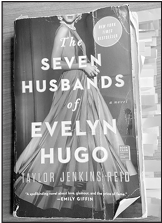
That book was Taylor Jenkins Reid’s “The Seven Husbands of Evelyn Hugo.” I first heard about it when I was 16, during the relationship that would eventually become my first experience with both falling deeply in love and learning what it meant to lose someone.
If no one’s ever told you, or if you’ve never met a 16-year-old girl, the emotions that she carries within herself can be so overwhelming that you might think she is just being dramatic. In reality, the feelings that I felt at 16 were probably the most profound, raw emotions that I had ever experienced. Even now, as I sit here writing as a 20-year-old woman, I still don’t believe that I’ve ever felt the way that I did when I was a 16-year-old girl.
It took me three years to pick up “The Seven Husbands of Evelyn Hugo,” the novel I could not stop hearing about while I was in the previously mentioned relationship.
To be completely honest, I started reading it because I missed being 16 and filled with unexplainable emotions. That’s the powerful thing about things like music, media and literature. They connect you with people in a way that nothing else can. Words have the power to take you back to a forgotten place or a person.
Maybe that’s why the novel affected me so deeply. It was the first time I read something that met me exactly where I was at. I was reading about love, identity and the versions of ourselves that we become because of the people we love.
As I started reading the first page, I knew that I would be hooked on the story. Page one is a newspaper article about the main character, Evelyn Hugo. Newspaper articles are scattered throughout the book pages because this romantic drama novel follows a 1960s Hollywood it-girl.
Born Evelyn Elena Herrera, Hugo is the daughter of Cuban immigrants. She grew up in New York City before making her way to Hollywood in 1955. She dyed her hair blonde and rebranded herself as Evelyn Hugo. Hugo quickly became a movie star, but a movie star in the 1960s meant something entirely different than what a movie star means today.
Like Evelyn said about Celia, I was already starting to feel mesmerized.
As I continued to read, I began to fall in love with all of the characters. There was something about each person in the story that deeply resonated with me, especially Evelyn herself, and the writer Monique Grant.
Monique Grant is the point of view readers get opposite of Evelyn Hugo’s. Grant is a biracial magazine reporter who was hired to write Hugo‘s biography. It is relatively my dream job to be a magazine reporter who gets asked, randomly and on a whim, to write one of Hollywood’s most beautiful and talented women’s stories.
The novel smoothly transitions between the present and the start of Evelyn’s journey as she navigates Hollywood, fame and love. But for all of the husbands and complicated relationships that filled most of the pages, readers come back to one relationship. The story may be named after the seven husbands but Evelyn’s most significant love was never with a man. It was with someone she could never be with publicly. The true love story lies between her and Celia St. James.
“I have been married seven times, and never once has it felt half as right as this.” Evelyn said in chapter 58. “I think that loving you has been the truest thing about me.”
This story of forbidden love is so well-written and captivating that I finished reading it in three days. At one point, it began to feel like I was watching a film rather than reading words from a page.
It was so good that I read it a second time and annotated Reid’s work. I carefully underlined and dissected the words on the pages. I doted over Reid’s way to explain the complexities of aging and love and fame. The book became thicker as I filled the sides with color-coded tabs. The paperback wrinkled. Pages accidentally torn.
Something Evelyn once said to Celia is how I felt while reading.
“Reading your letter felt like gasping for air after being trapped under water.”
I remember reading it for a third time, this time with my thoughts included. I was no longer rereading a story I loved, I was studying it. I wanted to make sense of why I felt so connected to these fictional characters. It felt so real, I remember thinking that the story would work exceptionally well in a series or movie adaptation.
So, whenever Anna Kendrick announced that she will be directing the film adaptation of the novel, you can only imagine how I reacted.
The film is currently in production with Netflix and a release date has not been set. When asked on a recent red carpet who will play Evelyn, Kendrick said they were still in the scripting phase and that she couldn’t give much information away. What she did say is that she is desperate to get it right.
“I’m thinking about the fans all the time,” Kendrick said to E!News. “I want to know exactly what gets at the heart of it for people because this book is so moving.”
If Kendrick were to ask me what gets at the heart of this story, I would say it is the perfect depiction of what it feels like to fall in and out of love.
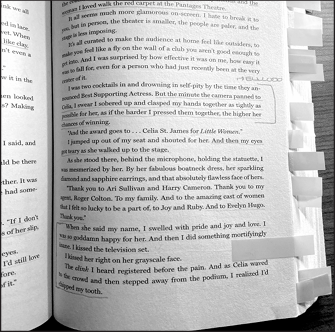
Whether that is shown through Hugo’s first four failed marriages or through one of the most important loves of her life and the father of her daughter, Harry Cameron, Evelyn’s relationships reveal different versions of what love can be. She often referred to Harry as the man who invented her, as he was her former producer and best friend. When Evelyn wins her Oscar she publicly thanks “my favorite producer, Harry Cameron” and tells him that “I love you.” Or perhaps it is seen in the lessons that husbands six and seven brought her.
Regardless, each husband isn’t truly what gets at the heart of the story for me. The heart of Evelyn’s story lies with Celia.
“My dearest Cece, please never forget that the sun rises and sets with your smile. At least to me it does. You’re the only thing on this planet worth worshipping.”
While I picked up the book looking to be brought back to the 16-year-old girl that I once was, it became something much more important to me. “The Seven Husbands of Evelyn Hugo” is more than a story about Hollywood or a woman that frequented the courthouse. For me, it is a story about what love will do to us and what it will make us do.